Clinical Anatomy & Treatment Guidance
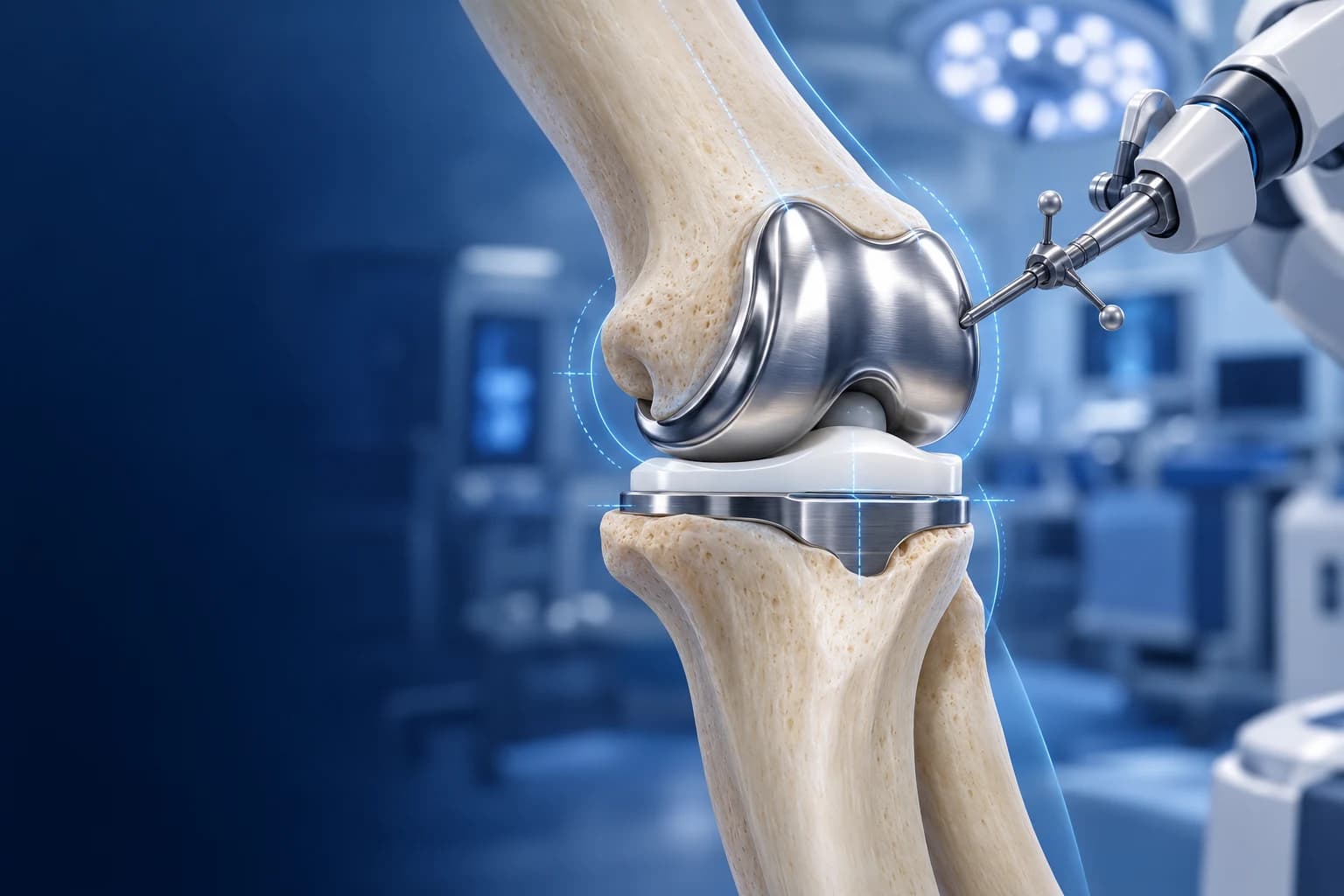
Robotic Knee Replacement
Robotic Knee Replacement
Persistent knee pain can make stairs, longer walks, and getting up from a chair challenging. When replacement is being considered, assessment focuses on your joint damage, movement needs, and how robotic assistance may support the surgical plan.
Dr. Adarsh Krishna K Bhat, Consultant Orthopaedic, Robotic, and Conventional Joint Replacement Surgeon (MBBS, MS Ortho - Gold Medallist, DNB, MNAMS, MCh Trauma & Ortho - Edinburgh, UK), offers consultations in Bangalore. The knee consultation considers how a proposed alignment plan relates to comfort, stability, and practical movement requirements.
When Should You Consider Robotic Knee Replacement?
Robotic assessment becomes relevant after establishing that knee resurfacing is appropriate and discussing the available treatment options.
- Activity-related pain: Advanced arthritis affecting walking and stairs.
- Arthritic stiffness: Pain with knee deformity or restricted bending.
- Limited treatment response: Disability despite suitable non-operative care.
- Resting discomfort: An increasingly painful knee interrupts sleep or makes getting comfortable difficult despite appropriate symptom management.
Common Conditions Treated
- Knee osteoarthritis: Extensive surface wear with activity-limiting symptoms.
- Inflammatory destruction: Joint damage that may require resurfacing despite medical management.
- Arthritic malalignment: Uneven wear with a deformity suitable for implant reconstruction.
- Post-traumatic arthritis: A prior knee injury has contributed to secondary surface wear requiring arthroplasty assessment.