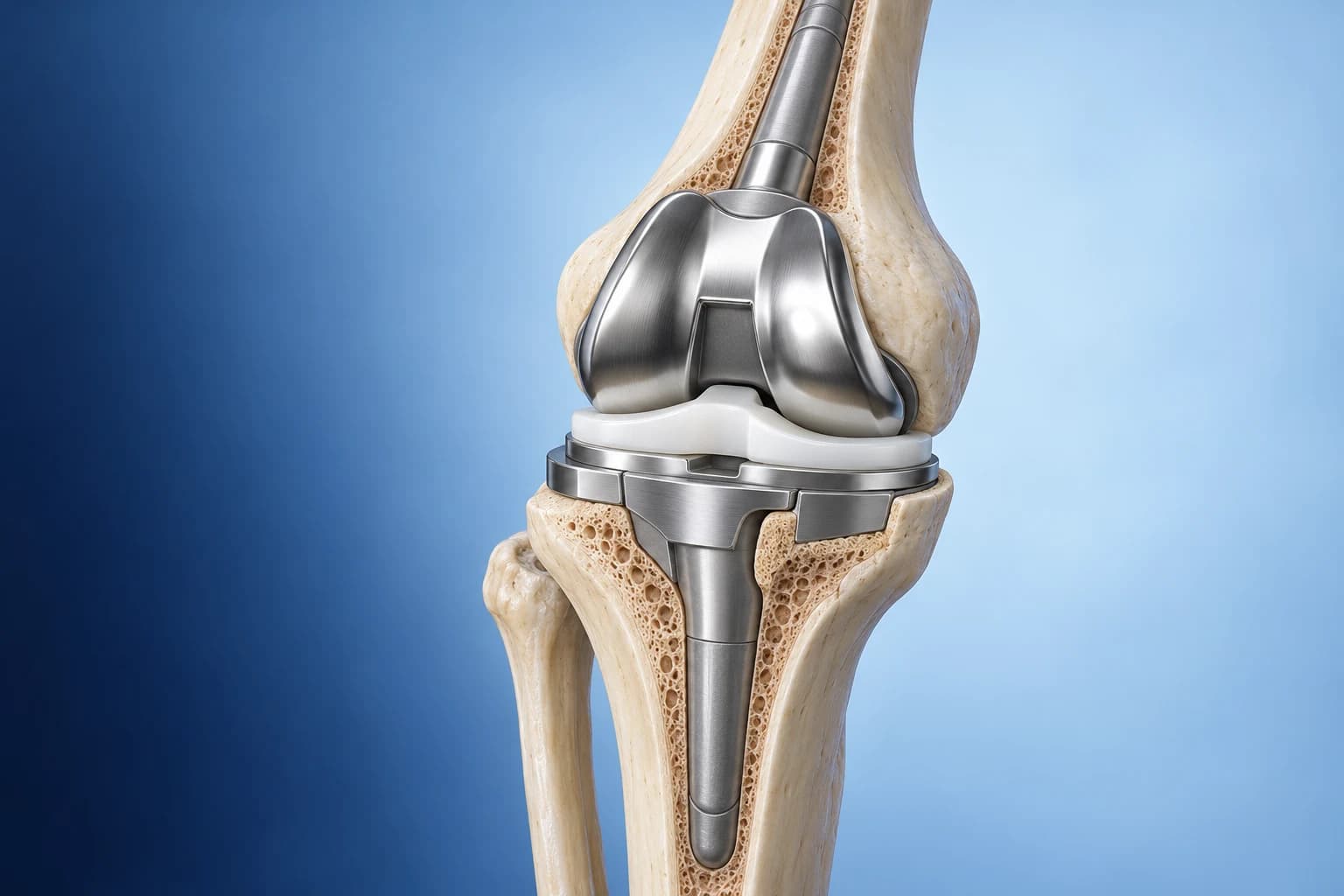
Clinical Anatomy & Treatment Guidance
Revision Knee Replacement
Revision Knee Replacement
A knee replacement that becomes painful, unstable, or stiff can affect confidence in everyday movement. Assessment seeks the cause of these changes so that any proposed revision addresses a defined problem.
Dr. Adarsh Krishna K Bhat, Consultant Orthopaedic, Robotic, and Conventional Joint Replacement Surgeon (MBBS, MS Ortho - Gold Medallist, DNB, MNAMS, MCh Trauma & Ortho - Edinburgh, UK), offers consultations in Bangalore. The revision discussion focuses on explaining the suspected failure mechanism and the reconstructive choices it creates for that individual knee.
When Should You Consider Revision Knee Replacement?
An established knee implant deserves review when its behaviour changes, particularly after an earlier period of satisfactory function.
- New implant-region pain: Increasing pain around a knee implant.
- Loss of stability: Giving way or progressive change in alignment.
- Recurring joint swelling: Recurrent swelling or suspected implant infection.
- Reduced confidence: Everyday walking becomes hesitant because the replaced knee no longer feels reliably supportive during ordinary transfers.
Common Conditions Treated
- Aseptic loosening: An implant losing secure attachment without demonstrated infection.
- Periprosthetic infection: Microbial involvement around the replacement requiring a dedicated strategy.
- Ligament or bearing failure: Instability and wear that compromise an existing prosthetic knee.
- Periprosthetic fracture: A break near a knee component can alter the fixation or reconstruction needed.