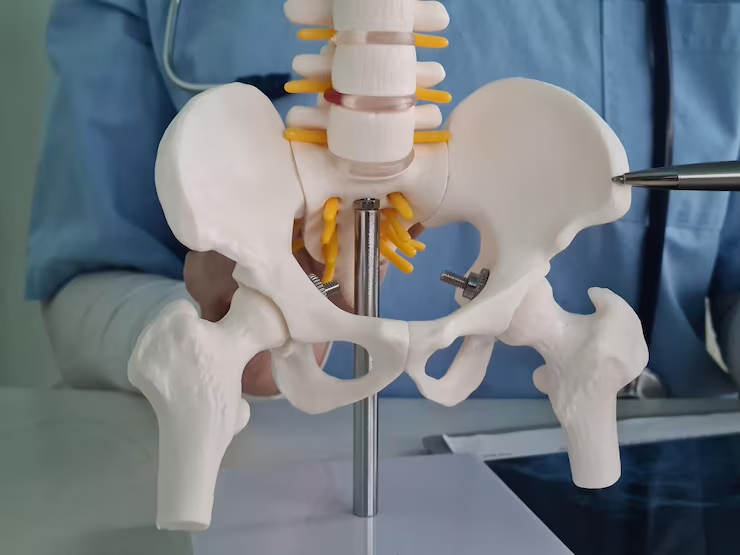
Clinical Anatomy & Treatment Guidance
Hip Replacement Surgery
Robotic & Conventional Hip Replacement Surgery
Living with chronic hip pain can gradually take away the simplest joys of daily life—from walking comfortably and climbing stairs to getting a restful night's sleep. When medications and physiotherapy no longer provide relief, hip replacement surgery offers a safe, proven solution to eliminate joint pain and restore natural mobility.
As an internationally trained Consultant Orthopaedic, Robotic, and Conventional Joint Replacement Surgeon, Dr. Adarsh Krishna K Bhat (MBBS, MS Ortho - Gold Medallist, DNB, MNAMS, MCh Trauma & Ortho - Edinburgh, UK) combines world-class surgical precision with personalized rehabilitation protocols to help you recover faster, safer, and with long-lasting results.
When Should You Consider a Hip Replacement?
In Dr. Adarsh’s practice, surgery is never the first option—conservative management through targeted medication, lifestyle modifications, and physiotherapy is always explored first. However, a hip replacement may be recommended if you experience:
- Persistent Groin or Thigh Pain: Deep aching pain in the hip, groin, or outer thigh that continues even while resting or disturbs your sleep at night.
- Severe Joint Stiffness: Difficulty putting on shoes and socks, getting in and out of a car, or rising from a chair.
- Limited Walking Ability: Needing support from a walking stick or walker, or developing a noticeable limp to compensate for hip discomfort.
- Ineffective Non-Surgical Care: Little to no pain relief from anti-inflammatory medications, joint injections, or structured physical therapy.
Common Conditions Treated
- Osteoarthritis: Age-related wear and tear of the protective cartilage inside the hip joint.
- Avascular Necrosis (AVN): Loss of blood supply to the femoral head (ball of the hip joint), leading to bone collapse—increasingly seen in younger and middle-aged adults.
- Rheumatoid Arthritis & Ankylosing Spondylitis: Chronic inflammatory conditions that progressively damage the joint lining and cartilage.
- Hip Fractures & Post-Traumatic Arthritis: Severe joint damage or neck-of-femur fractures following a fall or past trauma.