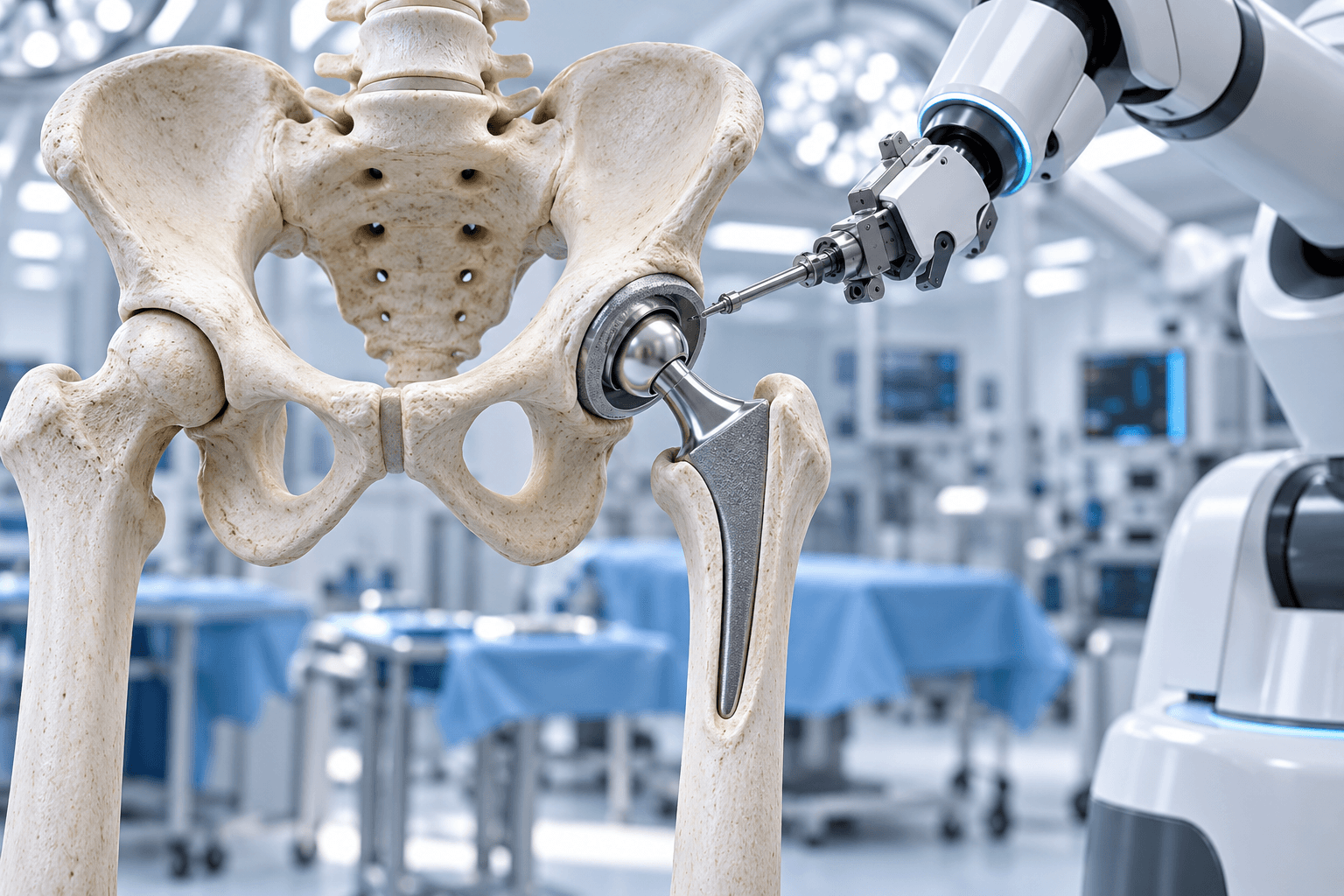
Clinical Anatomy & Treatment Guidance
Robotic Hip Replacement
Robotic Hip Replacement
Pain from a damaged hip can make walking, sleeping, and routine activities increasingly difficult. A consultation considers your joint condition and recovery goals, including whether robotic assistance has a useful role in the planned replacement.
Dr. Adarsh Krishna K Bhat, Consultant Orthopaedic, Robotic, and Conventional Joint Replacement Surgeon (MBBS, MS Ortho - Gold Medallist, DNB, MNAMS, MCh Trauma & Ortho - Edinburgh, UK), offers consultations in Bangalore. His hip assessment relates the planned reconstruction to standing posture, limb mechanics, and the movement demands important to the patient.
When Should You Consider Robotic Hip Replacement?
The first question is whether the hip itself needs replacement; the choice of a guidance platform follows that decision.
- Persistent groin pain: Arthritic groin pain despite treatment.
- Painful limp: Weight-bearing discomfort shortens the step or leads to a persistent change in walking pattern.
- Difficult daily tasks: Difficulty with shoes, transfers, or walking.
- Painful transfers: Rising from a low seat or entering a vehicle becomes increasingly uncomfortable because hip movement is restricted.
Common Conditions Treated
- Hip osteoarthritis: Worn socket and femoral surfaces affecting weight-bearing.
- Femoral-head collapse: Structural damage that may make a joint-preserving procedure unsuitable.
- Arthritic anatomical variation: A hip whose geometry needs particular attention during component planning.
- Inflammatory hip destruction: Persistent damage to both joint surfaces may warrant replacement despite treatment of the underlying condition.