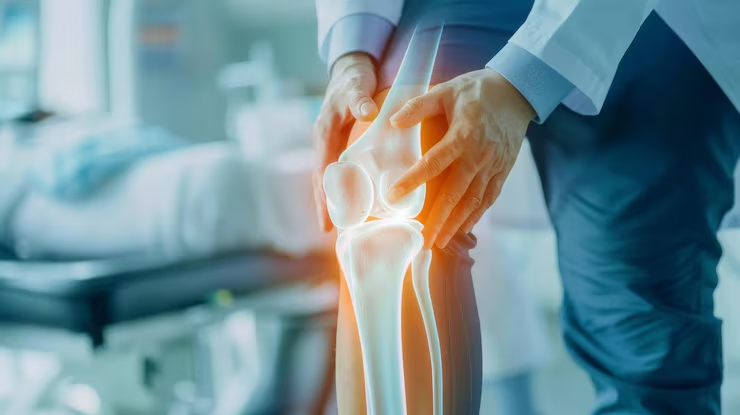
Clinical Anatomy & Treatment Guidance
Joint Preservation Surgery
Joint Preservation Surgery
Joint discomfort can restrict activity while raising questions about how much of the natural joint can be retained. Assessment explores the remaining cartilage, alignment, and stability to identify suitable options for preserving function.
Dr. Adarsh Krishna K Bhat, Consultant Orthopaedic, Robotic, and Conventional Joint Replacement Surgeon (MBBS, MS Ortho - Gold Medallist, DNB, MNAMS, MCh Trauma & Ortho - Edinburgh, UK), offers consultations in Bangalore. The preservation consultation weighs the value of retained native structures against the rehabilitation demands of an alignment or cartilage reconstruction.
When Should You Consider Joint Preservation Surgery?
A preservation opinion is most helpful when the distribution of damage, not simply the intensity of pain, may leave an alternative to whole-joint replacement.
- Localized loading pain: Pain concentrated in one knee compartment.
- Alignment-related difficulty: Angular deformity causing uneven joint loading.
- Focal joint injury: A focal cartilage injury in a preservable knee.
- Reduced activity tolerance: A previously manageable knee becomes limiting during exercise despite attempts to modify loading and maintain strength.
Common Conditions Treated
- Compartment overload: Abnormal leg mechanics concentrate force on a limited damaged surface.
- Focal chondral injury: A discrete defect may be considered for restoration when surrounding cartilage remains useful.
- Correctable angular deformity: Bone alignment contributes to symptoms in a joint worth preserving.
- Combined cartilage and meniscal deficiency: Loss of supporting tissue can influence whether an isolated surface procedure is adequate.